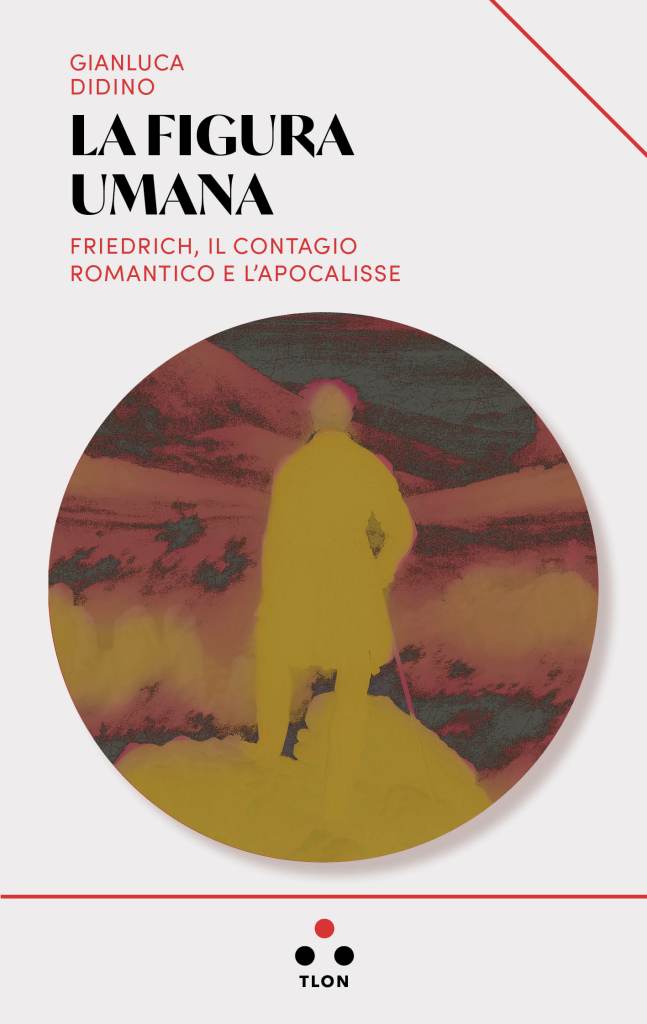
La figura umana, Edizioni Tlon, 2024
S., a mysterious childhood friend, sends the narrator a postcard depicting Wanderer above the Sea of Fog. The painting resurfaces in the protagonist’s memory and begins to haunt him; he sees it everywhere – perhaps an instance of the frequency illusion, or perhaps a message. But what can Friedrich, the Romantic painter who captured the divine within the landscape, tell us today? Who is the human figure standing out against a sea of fog?

Brucia, memoria, Quanti Einaudi, 2021
Two friends on vacation, a trip to Bilbao (or perhaps Barcelona?), the memory of an installation seen in a museum (or merely imagined?), the premonition of a cathedral in flames, abandoned projects and flânerie, the gaze of the machine tracking our movements and actions – a gaze that might even slip into our dreams.

Essere senza casa, minimum fax, 2020
We live in strange times. Our world is shaken by waves of populism and pandemics, thrust into a science-fiction future of automation and climate apocalypse. It seems to have spiraled out of control. During the first decade of the 21st century, almost without noticing, we fully entered the hypermodern age – an era defined by dizzying acceleration and posthuman horizons, in which the familiar contours of reality have shifted too rapidly for us to keep pace.

